Why Fleet Software Companies Build Their Own Hardware Platform
A growing number of fleet software companies — ELD providers, telematics platforms, dispatch solutions — are moving beyond selling software licenses and into selling complete hardware-plus-software solutions under their own brand. The economics of this shift are structural, not opportunistic. Here is why the software-only model is becoming harder to sustain, and how an OEM hardware partnership transforms a software company's unit economics, customer relationship, and competitive position.
Table of Contents
The Software-Only Model Is Under Pressure
For the past decade, the dominant model in fleet technology has been software-first. An ELD provider develops an app, certifies it with the FMCSA, and sells monthly subscriptions to fleet operators. The hardware — the tablet or smartphone that runs the app — is the customer's responsibility. The software company provides a list of recommended devices. The customer buys whatever they choose.
This model works until it doesn't. The pressure comes from multiple directions simultaneously. Customer support costs escalate when every hardware configuration is different — different Android versions, different screen sizes, different failure modes. Churn increases when a customer's tablet fails and they blame the software, not the hardware. Revenue per customer is capped at the software subscription price — there is no hardware revenue to capture. And competitors who offer a complete hardware-plus-software bundle capture customers who want one vendor to hold accountable, not two.
The software-only model is not broken. But its growth ceiling is lower than it was five years ago, and the operational friction is higher. Fleet software companies that add a branded hardware offering are not diversifying — they are responding to a structural shift in what fleet operators expect from their technology vendors. Launch your own hardware line →
Key takeaway: Selling software without hardware means outsourcing the customer experience to a device you did not choose, did not test, and cannot control. When that device fails, the customer calls you — and there is nothing you can do except recommend they buy a different tablet. That is not a support model. It is a liability.
The Unit Economics of Adding Hardware to a Software Business
Three numbers that change when a software company adds a branded hardware tier
Revenue Per Customer
A software-only ELD subscription generates $15-25 per vehicle per month. A hardware-plus-software bundle generates the same subscription revenue plus a one-time hardware margin of $100-300 per vehicle at deployment, plus hardware refresh revenue every 3-5 years. Over a 5-year customer lifetime, total revenue per vehicle can double or triple compared to software alone — without increasing churn, because the customer is more deeply integrated into the vendor's ecosystem. Build your bundled fleet solution →
Reduction in Support Tickets
When every customer runs the same software on a different tablet — different OS versions, different screen sizes, different hardware quirks — support costs scale with customer count. When every customer runs the same software on the same pre-configured hardware, the support surface collapses. One OS version. One hardware configuration. One known set of failure modes. Support teams troubleshoot faster, resolve issues in fewer calls, and spend less time diagnosing problems caused by consumer hardware that was never designed for vehicle use.
Churn Reduction
A customer who buys only software can cancel and switch to a competitor with minimal switching cost — install a new app, log in, done. A customer who has invested in branded hardware, integrated it into their vehicle fleet, and trained their drivers on it faces a material switching cost. They are less likely to churn for a competitor offering a slightly lower subscription price, because the hardware replacement cost and retraining effort outweigh the software savings. Hardware creates switching friction — and switching friction is retention.
Why this matters: A fleet software company with 1,000 vehicles under management can add $100,000-300,000 in one-time hardware revenue at deployment, plus hardware refresh revenue every 3-5 years — without acquiring a single new customer. The hardware revenue comes from the same customers who already pay for software. It is not a new business. It is a deeper monetization of the existing customer base. Explore in-vehicle terminal options →
Three Ways to Add Hardware — and Why OEM Makes Sense
Not every hardware strategy is equal. Three approaches, three different risk profiles.
Model 1: Resell Consumer Tablets
What it is: Buy Samsung or Lenovo tablets in bulk, pre-install your app, add a protective case, resell to customers.
Why it fails: Consumer tablets are not designed for vehicle use. They overheat, lose charge, cannot interface with CAN Bus or RS232, and have 18-month lifecycles that force constant model changes. Support tickets increase because the hardware fails in ways your app cannot prevent. The brand you are reselling is not your brand — and when the tablet fails, your customer blames you, not Samsung.
Risk profile: Low upfront investment, high ongoing operational cost, brand dilution, customer dissatisfaction.
Model 2: Build Your Own Hardware
What it is: Design and manufacture your own rugged tablet — custom PCB, custom enclosure, custom firmware, your own supply chain.
Why it is rarely the right choice: Hardware development requires a different skill set from software development — electrical engineering, RF certification, thermal management, supply chain management, component sourcing. The minimum viable investment to design, certify, and manufacture a rugged vehicle tablet is in the hundreds of thousands of dollars before the first unit ships. And once shipped, you own the warranty liability, the component obsolescence risk, and the manufacturing quality control.
Risk profile: Very high upfront investment, long time-to-market, core competency mismatch for a software company.
Model 3: White-Label OEM Hardware
What it is: Partner with an OEM manufacturer who produces rugged vehicle tablets. Customize I/O, firmware, and branding. Sell the finished device under your own brand — with your logo, your app pre-installed, your packaging.
Why it works: The OEM manufacturer owns the hardware engineering, certification, supply chain, and manufacturing quality. You own the software, the brand, and the customer relationship. The hardware arrives pre-configured to your specification — your app pre-loaded, your MDM policies applied, your logo on the boot screen. Your customer receives a complete solution that carries your brand and runs your software on hardware purpose-built for vehicle environments. You capture hardware revenue without building a hardware company.
Risk profile: Moderate upfront investment (MOQ and customization), fast time-to-market (existing platforms, not new designs), core competency alignment (you focus on software, the OEM focuses on hardware). Start your OEM hardware partnership →
The Brand Equation: Why Your Name on the Hardware Matters
When your customer's driver interacts with a tablet every day, whose brand do they see?
Scenario A: Software on Someone Else's Hardware
Your ELD app runs on a Samsung tablet. The driver sees a Samsung logo every morning. When the tablet works, the driver thinks, "This Samsung tablet runs our ELD software." When the tablet fails — overheats in the sun, loses charge mid-shift, screen cracks — the driver thinks, "This ELD software is unreliable." The hardware brand gets credit for reliability. The software brand gets blamed for failure. You invested years building your software reputation. A consumer tablet you did not choose is eroding it — and the customer does not distinguish between hardware failure and software failure.
Scenario B: Your Software on Your Branded Hardware
Your ELD software runs on a rugged tablet that carries your logo on the device, on the boot screen, and on the packaging. The driver sees your brand every morning. When the tablet works — and it does, because it is engineered for vehicle environments — the driver thinks, "This ELD solution is reliable." The hardware and software form a single experience under a single brand. Your reputation is not at the mercy of a consumer electronics company's product roadmap. The hardware was designed for your software, not adapted to it.
Brand principle: In fleet technology, the driver's experience of the software is inseparable from their experience of the hardware. A branded hardware platform ensures that every interaction — powering on, launching the app, completing a DVIR, receiving a dispatch message — reinforces your brand, not a consumer electronics company's brand. Learn more about white-label hardware →
How the OEM Partnership Model Works — From Software to Shipped Solution
The path from a software application to a branded hardware product, step by step
Define Your Hardware Spec
Choose the platform, configure I/O, specify branding requirements. Your software's hardware needs — CAN Bus, RS232, camera inputs, screen size — determine the platform. TOPICON engineering validates compatibility before you commit.
Receive a Sample Unit
Test your software on the actual hardware. Validate performance, I/O, and user experience before committing to production. Adjust specifications based on test results.
Pre-Load & Brand
Your app is pre-installed at the factory. MDM policies are applied. Your logo is on the device, the boot screen, and the packaging. The device arrives at your customer's location ready for immediate deployment. Configure your branded tablet →
Sell Under Your Brand
Your customer buys a complete solution — your software on your branded hardware. You own the customer relationship. You set the pricing. You capture both software and hardware revenue. TOPICON remains invisible to the end user.
Frequently Asked Questions
What is the minimum investment to launch a branded hardware product?
The primary investment is the initial order quantity, which is project-based and depends on the product model and customization scope. TOPICON works with system integrators at different scales — from pilot deployments to full fleet rollouts. There are no rigid MOQ thresholds for qualified partners. Contact us with your project scope for a tailored proposal.
How long does it take from signing to shipping branded hardware?
Standard white-label projects typically ship in 4-8 weeks from specification sign-off — assuming the customization scope is defined and the software pre-load is tested on a sample unit. Custom I/O configurations or custom firmware development may extend the timeline. Contact us with your requirements for a precise project schedule.
Who handles hardware warranty and support?
TOPICON provides hardware warranty and RMA support to you, the partner. You manage the customer-facing support relationship — we manage the hardware repair and replacement behind the scenes. Your customer contacts you. You contact us. The support workflow is designed so that your customer's experience is with your brand, not ours.
Will TOPICON branding appear anywhere on the device?
No. White-label OEM partnership means the device carries your logo on the hardware, your boot screen animation, and your branding on the packaging. TOPICON does not appear on the finished product. Your customer sees your brand — exclusively. Begin your OEM project →
Can we start with a small pilot and scale to full fleet deployment?
Yes. The typical path is: define specifications, receive a sample unit, validate with your software, order a pilot batch for a subset of your fleet, gather operational feedback, then scale to full deployment. Each phase has its own order quantity and timeline. There is no requirement to commit to full fleet volume at the pilot stage. Explore partnership options →
Related OEM & Business Strategy Resources
Partner Program →
Build your brand on our hardware platform
White-Label Tablets →
Your brand, our hardware engineering
OEM Customization →
Custom I/O, firmware, and branding
Why SI Choose OEM Over Tier-1 →
The economics of OEM vs big-brand hardware
True Cost of Fleet Hardware →
Why purchase price is the wrong metric
Discuss Your Project →
Talk to our partnership team
Ready to Add a Branded Hardware Tier to Your Software Business?
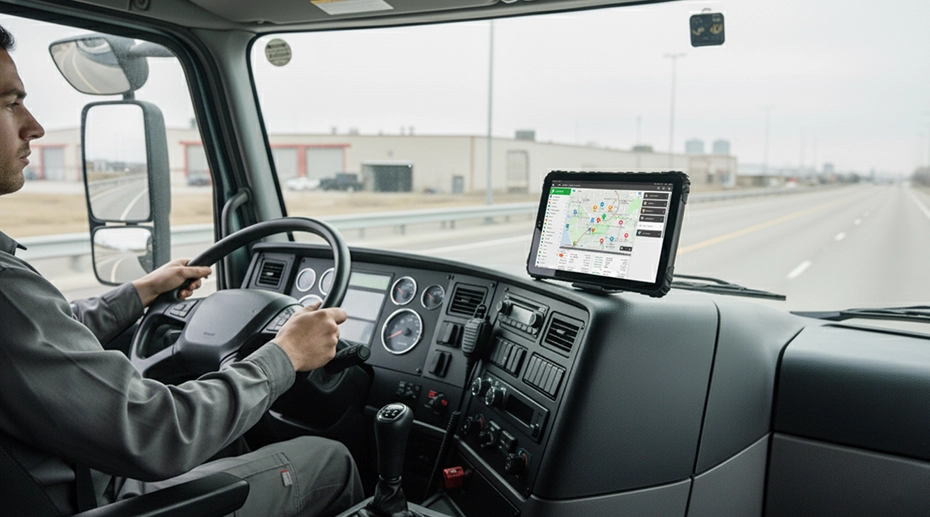
TOPICON provides white-label rugged tablets with custom I/O, pre-loaded software, and full OEM branding — so you can sell a complete solution under your own name, without building a hardware company.